
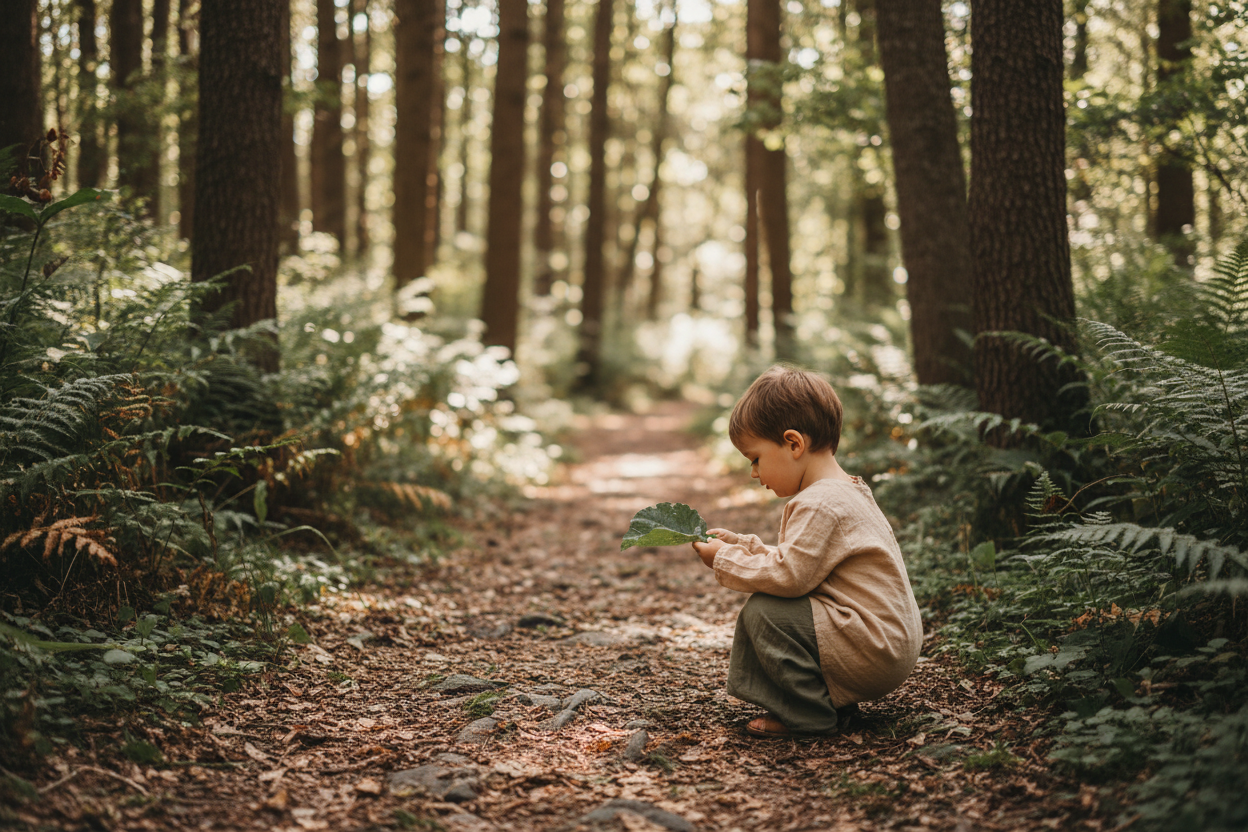
There's a moment every parent recognises. Your toddler is outside — maybe in the backyard, maybe at a park — and they've found something completely unplanned. A stick. A puddle. A line of ants. And for the next twenty minutes, they are completely absorbed. No prompting. No screen. No you. That right there? That's Montessori working exactly as it should.
Why Outdoor Space Is a Montessori Environment Too
In Montessori philosophy, the environment is the third teacher. We spend a lot of time thinking about what goes on a shelf indoors — but the outdoors is one of the richest prepared environments a child can have. Nature offers open-ended, self-correcting experiences that no toy can fully replicate. The wind changes. The mud dries. The caterpillar moves on its own schedule. Children learn to observe, adapt, and persist — all without adult direction.
The key is intentionality. A Montessori outdoor space isn't just "go play outside." It's a thoughtfully arranged space that invites exploration, supports independence, and respects the child's pace.
What Montessori Outdoor Independence Actually Looks Like
Independence outdoors doesn't mean leaving children unsupervised. It means stepping back enough to let them lead. In practice, this looks like:
- Letting a toddler choose which path to walk down — even if it's slower
- Allowing a child to carry their own water bottle, tools, or basket
- Resisting the urge to solve a problem (a stuck lid, a wobbly rock) before they've had a real chance to try
- Following their curiosity rather than redirecting it toward your agenda
The goal isn't a perfectly productive outdoor session. It's a child who trusts their own instincts and builds confidence through real, unscripted experience.
Simple Ways to Set Up Your Outdoor Montessori Space This Spring
You don't need a large yard or expensive equipment. A few intentional additions can transform any outdoor space:
- A digging patch: A small designated area with real child-sized tools invites purposeful work and sensory exploration.
- Natural loose parts: Pinecones, stones, shells, sticks, and seed pods are endlessly versatile. Store them in open baskets or trays so children can access them independently.
- A watering station: A small watering can and a few pots or a garden bed give children real responsibility over living things.
- A sit spot: A low stump, flat stone, or simple mat where a child can pause, observe, and just be. Stillness is underrated in early childhood.
- A mud kitchen: Old pots, spoons, and a patch of earth are all you need. Messy play builds fine motor skills, creativity, and sensory tolerance.
A Note for Parents Who Feel the Pull to Help
It's hard to watch a child struggle. Our instinct is to step in, fix it, smooth it over. But in Montessori, we call this "the hardest work" — the work of waiting. When you hold back and let a child work through frustration, you're not being passive. You're actively building their resilience, problem-solving capacity, and self-belief.
A useful phrase to keep in mind: "I see you working on that." It acknowledges effort without taking over. It says: I trust you.
The Seasons Are Your Curriculum
Spring is a particularly rich time to lean into outdoor Montessori learning. Everything is changing — visibly, quickly, and in ways children can track over days and weeks. Budding trees, returning birds, rain and mud, longer evenings. These aren't distractions from learning. They are the curriculum.
Consider keeping a simple nature journal — even for very young children. A few pressed leaves, a crayon rubbing of bark, a drawing of what they found. Over time, this becomes a record of observation, patience, and wonder.
Start Simple. Start This Weekend.
You don't need to overhaul your outdoor space or buy anything new. This weekend, try one thing: go outside with your child and follow their lead for twenty minutes. Don't suggest. Don't redirect. Just observe. You may be surprised by what they teach you.
When you're ready to add intentional tools and materials to your outdoor space, explore our collection of Montessori-aligned outdoor resources — designed to support real independence, real curiosity, and real childhood.


Dejar un comentario
Todos los comentarios se revisan antes de su publicación.
Este sitio está protegido por hCaptcha y se aplican la Política de privacidad de hCaptcha y los Términos del servicio.